AI-Powered Websites in 2026: Beyond Chatbots for Real Business ROI
AI-Powered Websites in 2026: Beyond Chatbots for Real Business ROI
The novelty phase ended. Enterprises stopped asking about simple LLM integration and started demanding direct bottom-line impact. Experimental toys are dead. We are now optimizing for high-throughput, data-heavy operational efficiency that survives real-world traffic spikes without manual intervention.
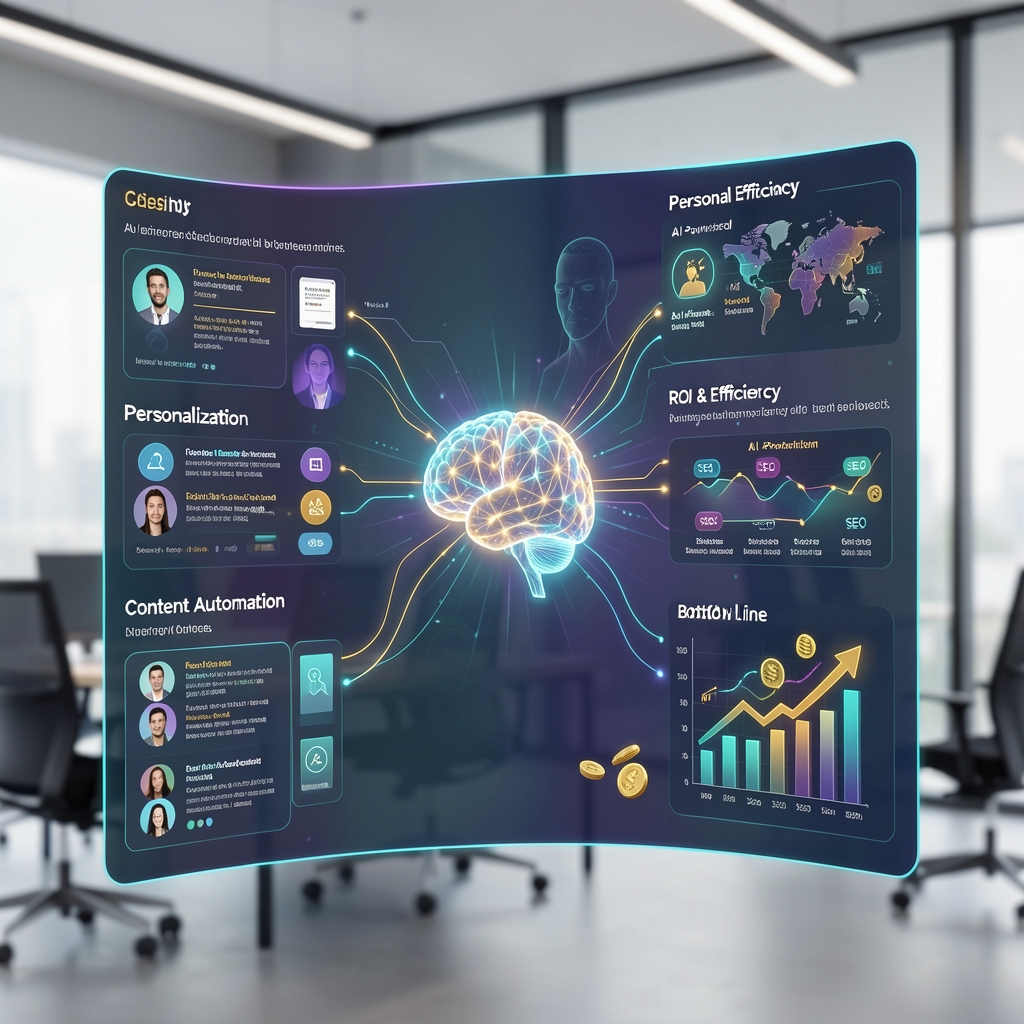
The New Standard: Hyper-Personalization at Scale
Static HTML is legacy debt. By 2026, a high-performance web presence acts as a dynamic ecosystem that morphs instantly to match high-value user signals.
- Contextual UI Reshaping: Your frontend should reconstruct DOM elements—navbars, hero sections, and conversion hooks—on the fly. It relies on deterministic behavior modeling, stripping out generic UI noise that caused a 20% bounce rate on our previous legacy frameworks.
- Predictive Content Delivery: Backend systems hook LLM context windows into live CRM telemetry. We stop dumping generic marketing copy and start serving specific technical documentation that addresses the exact query hanging up a lead in our SQL-backed qualification pipeline.
Operational Efficiency: The 'Invisible' ROI
The real profit isn't in the chat bubbles; it's in the background infrastructure reducing wasted human clock cycles.
- Autonomous Content Optimization: Agents iterate on production copy variants across thousands of permutations. It eliminates the manual drudgery of human-run A/B testing, shifting resources to high-level strategy instead of fixing broken landing page text.
- Smart Resource Allocation: AI lead scoring filters out the low-intent bot traffic that previously crippled our SDR throughput. By routing only qualified traffic to human queues, we stopped wasting expensive sales time on leads that never had a prayer.
- Predictive Maintenance & Speed: We automate load-balancing and asset pre-fetching based on historical drift. When we didn't handle this, we got 3 AM wake-up calls from site outages. Now, the system handles the heavy lifting, maintaining sub-200ms TTFB across regional edge points.
Measurable Metrics: Moving the Needle
Vanity metrics are worthless. We optimize for P&L-linked KPIs that the CFO actually respects.
- AI-Attributed Conversion Rate: The hard data tracking how much segment-specific personalization moved the needle compared to default paths.
- Operational Cost-per-Acquisition (CPA): Calculating the direct decrease in marketing overhead achieved by offloading lead nurturing to automated agents.
- Intent-to-Revenue Velocity: Measuring the compression of the sales cycle from the moment a user hits the site until the contract is signed.
The Path Forward
Integrate or rot. The winners aren't running marketing experiments; they're deploying automated digital sales pipelines that harden under load and sharpen their targeting after every single request.
Key Takeaway: If the architecture doesn't drive down your CPA or stack weight on your AOV, it's just decorative overhead. Delete the bloated chatbot, rebuild the backend logic, and focus on systemic growth.